AI Portrait Generator Workflow for Pin Keepsakes
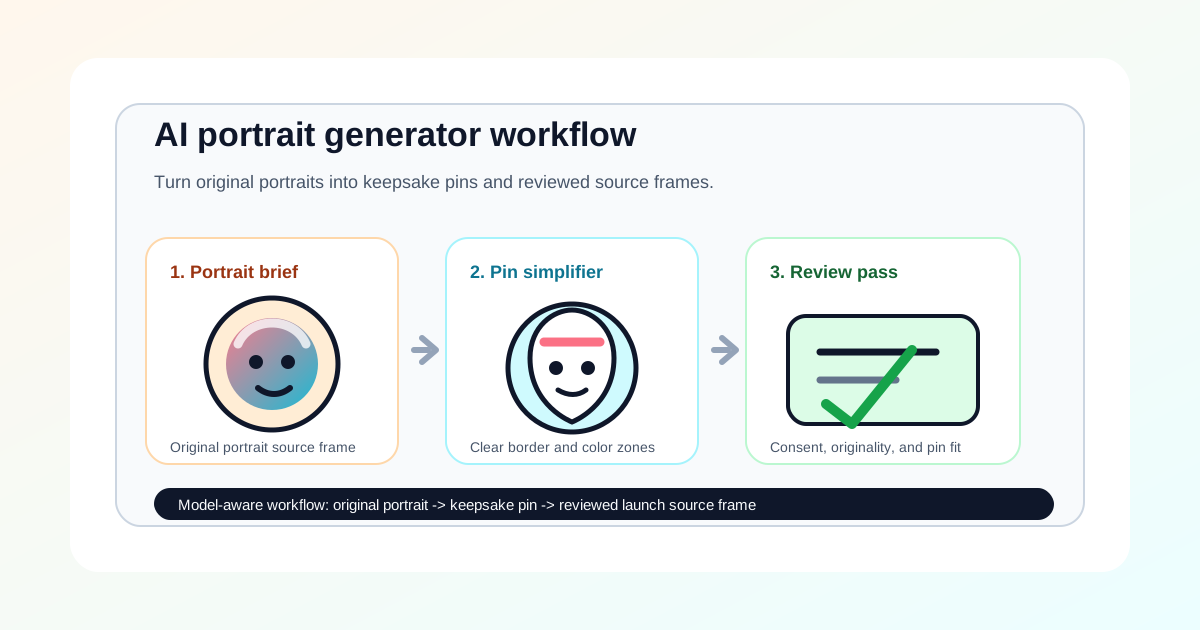
AI portrait generator demand is useful for AI Pin Maker when the portrait becomes a product-safe keepsake, not a shortcut for copying a real person's face. A portrait can become a founder badge, speaker pin, creator collectible, graduation gift, fan-club emblem, or campaign source frame, but only after it is simplified and reviewed.
The important distinction is between a portrait look and a likeness claim. AI Pin Maker works best when the brief asks for an original illustrated portrait, a fictional founder mascot, a commemorative character, or a stylized badge face. The workflow should avoid celebrity imitation, private-person replication, copied profile photos, and any design that depends on face-specific identity cues.
The visible country split was led by the United States at 2.9K searches, followed by India at 1.0K, the United Kingdom at 590, Canada at 390, Germany at 320, Australia at 260, and 1.4K searches across other regions. Related visible terms included `ai portrait generator free` at 590 searches, `canva ai portrait generator` at 480 searches, `ai pet portrait generator` at 880 searches, and `ai pet portrait generator free` at 1.9K searches.
Start with a product-safe portrait brief
Describe the product, not a headshot
A strong AI Pin Maker prompt should describe the object that the portrait will become. Instead of asking for a generic headshot, define a round enamel portrait pin, illustrated speaker badge, memorial keepsake, creator merch badge, club officer pin, or portrait-style backing-card icon.
Try AI Pin Maker when the portrait should become a physical pin concept. Use text to image when the concept starts from a written prompt. Use image to video only after the still portrait has passed originality, identity, and product review.
This keeps the creative path narrow. AI Pin Maker is not a passport-photo service, face-verification tool, LinkedIn headshot replacement, or celebrity portrait copier. It supports original visual ideation, model-aware image generation, and source-frame planning for product-style creative work.
Use creator signals as a review warning
Creator discussion shows both tool demand and social sensitivity. a creator posted multiple replies using the exact phrase `AI portrait generator` while promoting portrait and headshot workflows.
The same broader query also surfaced criticism around AI portraits. These are small signals, but they show that portrait output is judged socially, not only visually.
Those posts are evidence of market language and review risk, not source material. AI Pin Maker should use the signal to make portrait briefs more careful: original characters, consented references only, no private likeness copying, no public-figure imitation, and no product promise that a generated portrait replaces professional identity checks.
Simplify the portrait into a pin
Reduce the face to pin-ready shapes
Portrait images often carry too much detail for enamel pins. Hair texture, glasses, facial shadows, jewelry, and background gradients may work in a 1024-pixel preview but fail once the design is reduced to metal lines, color fills, and a small product photograph.
Before moving to pin output, reduce the portrait to a clear head shape, one expression, three to six color zones, and a visible border. If the portrait needs tiny eyes, fine wrinkles, text labels, or photo-realistic skin shading to remain recognizable, it is not ready for a pin workflow.
For many use cases, a portrait-inspired emblem is stronger than a literal portrait. A microphone halo for a speaker, graduation cap silhouette, creator initials, club color frame, or pet-style mascot cue can preserve the story while reducing identity risk and manufacturing complexity.
Route models by portrait risk
Route by portrait risk
For still portrait concepts, image routes such as GPT Image 2, Gemini image routes, ByteDance Doubao or Seedream image models, and Alibaba Wan image models fit the image stage. The prompt should ask for an original illustrated portrait or fictional character and should name the final product constraint.
Video routes are optional later steps. Seedance, Wan, HappyHorse, Kling, and Veo can animate an approved portrait source frame for a reveal clip, but motion should not be used to hide an unreviewed still.
Keep identity routing explicit. For portrait keepsakes, keep the brief public-safe, consent-aware, and product-focused, regardless of which image or video family the workflow uses.
What usually goes wrong
Portrait pins fail in three recognizable ways. The first is the likeness slip: a brief drifts toward a real person, a celebrity, or a copied profile photo, and the result looks great but carries consent and rights exposure; keep the brief on an original illustrated character or a fictional founder mascot and refuse face-specific identity cues.
The second is detail collapse, where glasses, fine wrinkles, jewelry, and skin shading read fine in a 1024-pixel preview but turn to mud once the face is reduced to enamel fills and a metal border; if the portrait stops being recognizable without those tiny details, swap to a portrait-inspired emblem like a microphone halo or graduation-cap silhouette.
The third is animating too early, where an unreviewed still gets pushed into a reveal clip and the motion amplifies a warped eye or an unstable jawline; lock the still, confirm the head shape and expression hold at pin scale, and only then route to a video model. Catching these keeps a speaker badge or memorial keepsake both safe and manufacturable. ## Turn portrait demand into an AI Pin Maker action
The conversion path is straightforward: define an original portrait brief, generate a clean source frame, check identity and consent risk, simplify the face into a pin-ready shape, and then create the keepsake pin or badge concept. Only after the still design passes review should the creator test motion, music, or launch assets.
Try AI Pin Maker when the approved portrait should become a pin. Use text to image when the portrait starts from a prompt. Use image to video when the reviewed source frame should become a short reveal clip.
Channels `ai portrait generator` into a model-aware AI Pin Maker workflow: create an original portrait, review identity and consent risk, simplify it for pin production, and move toward paid output only when the design works as a product.
Explore more AI Pin Maker tools